What Independent Music Means in Practice
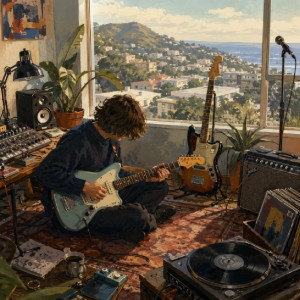
Ask ten people what "indie" means and you'll get ten different answers. That's the problem with the word. Used loosely, it describes a sound – jangly guitars, melodic vocals, a certain lo-fi warmth. Used precisely, it describes a business model. A band is independent when it records, releases, and distributes music without signing to a major label like Universal or Sony. Those two definitions don't always overlap.
Indie pop-rock tends to draw on guitar-driven arrangements, DIY recording ethics, and a strong sense of artistic control. The appeal isn't just sonic. There's no denying that working outside the major-label system – even when it's harder financially – gives artists real ownership over their sound and direction.
New Zealand's guitar-based music scene has its own distinct history worth understanding. The Dunedin Sound of the early 1980s, built around Flying Nun Records and bands like The Clean and The Chills, became internationally recognised precisely because it emerged from a small, geographically isolated city. Student culture, community radio stations like RDU and bFM, and small venues gave local artists room to develop without commercial pressure. That grassroots infrastructure shaped scenes in Auckland, Wellington, and Christchurch for decades afterward, and its influence still runs through New Zealand independent music today.
How Local Bands Start, Collaborate, and Build Momentum
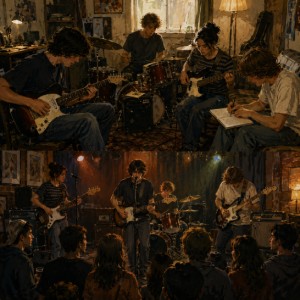
A band usually starts with an incredibly simple set of premises - some friends, guitar players, who casually invite a third buddy to play the drums. The first rehearsal spaces are, conventionally, a garage or a flat of some kind that even the neighbors approve of the commotion in. And it is here where the hard work of constructing that unified sound starts.
Collaboration in a band is seldom all shared, and more often than not there is nothing wrong with that. Often it is a couple or just one guy driving the songwriting, while the rest pick ideas apart and put them back together from scratch. One might bring in a progression on guitar, then the singer would rewrite the melody. Then, the bassist adds something, or completely changes the soul of the song. Between the tug-of-war of these merits, the identity we ascribe to bands actually get shaped.
Early performances usually happen before bands are ready, sometimes appearing at open mic evenings at local cafes or opening slots with slightly bigger signed bands, or performing at student events on campus. This is the testing ground where songs get their first public airing. Playing to half an audience in a bar a university teaches you more about poise and performance than any amount of rehearsal time might.
Loyalty cemented by the audience is largely built upon consistency. Playing almost regularly in the same places, building relationships with other musicians being honest members of the music community and even putting out a rough two-song demo is a nod in the direction of having a bit of seriousness attached to you. The following grows from there.
From Small Gigs to Streaming Platforms
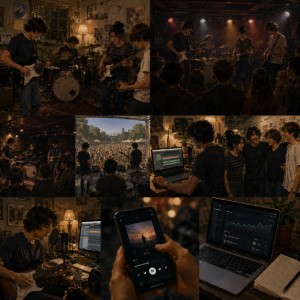
Most bands start exactly where you'd expect: a cramped rehearsal room, a house party, or a 30-minute slot at a local pub on a Tuesday night. Those early shows rarely draw more than a handful of friends, but they matter. Playing live regularly is how bands learn to hold a room, tighten their sound, and build a reputation that spreads by word of mouth rather than algorithm.
Small venues, all-ages shows, and local festivals form the actual ladder. A band might spend a year working up from a 50-cap room to a 200-cap venue, picking up support slots, connecting with independent promoters, and earning a spot on a community festival lineup. There's no shortcut here. Sustained local presence builds the kind of audience that actually shows up.
Recording follows naturally from that momentum. Most independent artists start with a single, not an album. A well-produced three-minute track released through a digital distributor like DistroKid or TuneCore lands the song on Spotify, Apple Music, and Bandcamp within days. An EP of four or five songs gives listeners something to sit with between live shows.
Audience growth off the back of releases depends on consistency. Regular social content, a simple mailing list, and building relationships with other local acts all compound over time. Overnight discovery is rare. Gradual, scene-rooted momentum is how most independent artists actually grow.
Local Scenes Survive When People Show Up
Every place shutting down, every band throwing in the towel over empty shows, and every locally released CD which stays unsold, each represents a small but actual loss of what took years to mold. Independent music does not stand on the power of music alone. It is generated by the concerted effort of artists who play to small crowds; venue owners who take a risk on a sick night; promoters who have such faith in acts that others are not willing to book; and fans who show up saying, 'Yes, this show on Thursday night is worth coming to.' When all these components come together, the scene comes alive. The fans who follow local bands, advertise concerts on their behalf, and come back to see other shows-they are providing support far beyond one artist. They are helping to sustain an entire environment. Grassroots music is not a stepping-stone to something bigger. It is the culture in many communities.